Beginners Guide to Square Foot Gardening
---------------------------------------------------------
Do you want to start a garden but are overwhelmed about how to start? Let me introduce you to a system that is perfect for small spaces called square foot gardening. I think this is a great way to garden for someone who is just getting started. If you are a beginning gardener, click here to check out my 7 beginner gardening mistakes to avoid. Square Foot Gardening features high yields in a small, easy-to-care-for plot.
Let me start by saying right off the bat that this method is amazing, but way more involved than one blog post could cover. I will cover the basics here but I HIGHLY recommend getting the book “All New Square Foot Gardening” by Mel Bartholomew & the Square Foot Gardening Foundation. They have released a few different editions over the years, each with new info or ways to make your square foot garden better. Mel invented the system in the 1970s and the foundation has been carrying on his good work since his passing in 2016. They are the experts on all things Square Foot Gardening!

What is square foot gardening?
It is just how it sounds. If you have a 4×8 garden bed, that is 32 square feet, and you’ll have 32 “boxes” to plant in. Most people actually put down a grid using either twine, wood dowels, or PVC piping – or you can just imagine the grid is there and plant accordingly.
Square foot gardening plants rows closer together than in traditional gardening. The upside to close planting is it tends to squeeze out weeds. And of course, it allows you to get more vegetables in a smaller space.
So why doesn’t everyone do this? It does require maintenance. Plan to water a little more frequently. You need to manage the soil as all those plants can use up nutrients quicker than traditional gardens. You will also need to pay attention to what kind of plants you are planting because not all plants play well together. Click here to read about companion planting Square foot gardening is an efficient way for virtually everyone to be able to grow their own food.
Raised beds or “in the ground” planting?
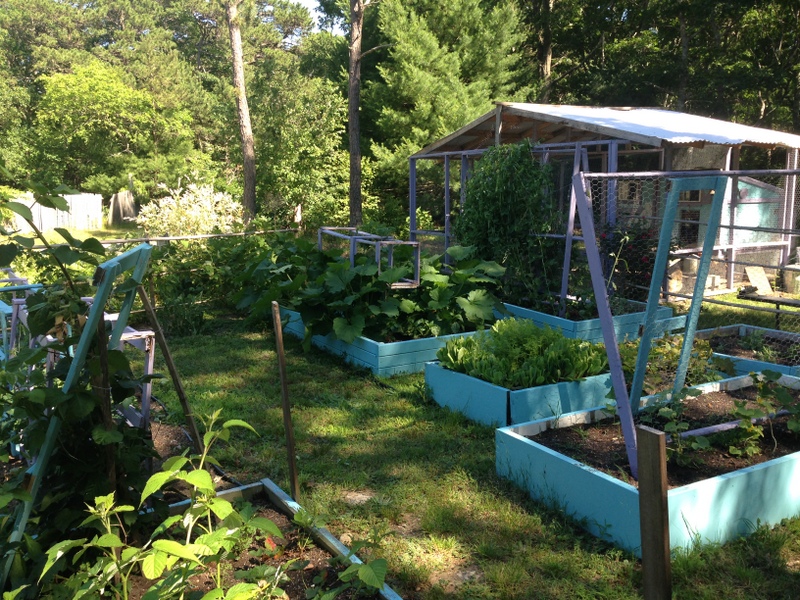
The answer to this is how good is your soil? My garden is set up for raised beds. Cape Cod is a lovely place to live but we are basically a big sand bar that sticks out into the ocean. Unfortunately, that doesn’t make for the best farming soil.
I tried for many years with conventional gardening with so-so results. Amending & tilling soil, digging out endless rocks and never-ending weeds. Finally, I gave up, switched over to raised beds and never looked back. The best part about having raised beds is having total control over soil quality. Twice a year I add compost from my compost bin to replenish the nutrients spent on growing and to replace any soil that washed away or compacted down.
Raised beds cut down on the amount of weeds growing, but also makes it easier to pull the weeds that do grow. You don’t have to contend with rocks or stray tree roots. It’s easy to add cover in winter so the soil is warmer and ready to go sooner in spring. You can even add a cold frame on top for winter gardening. Most people do square foot gardening in raised beds, but you certainly can use this method with conventional “in the ground” gardening.
How much garden do I need?
This depends on a lot of things. How many people are you feeding? Do you want enough just for seasonal fresh eating? Will you want extra for canning, preserving, etc? Do you want enough to share with friends, family, or to sell at farmer’s market? Will you be conventional row gardening or square foot gardening? But most of all, how much space do you have?
Most people seem to agree that for a conventional row garden (a row of corn, a row of lettuce, a row of tomatoes…) 100 square feet per person is needed for a fresh eating garden, and about 200 square feet per person if you want to can food for year round use. With square foot gardening you need as little as 16 square feet per person for fresh eating and about 32 square feet per person to have enough for preserving!
Finding the best location
Go out into your yard at several times during the day and note where the sun is and how it moves across your yard. What areas have the most sun? Ideally you will have an area that receives at least 6-8 hours of strong sunlight.
Where is your water source located? Of course it’s great if that works out to also be a sunny spot, but you can work around it by snaking hoses where they need to be.
Take it Slow
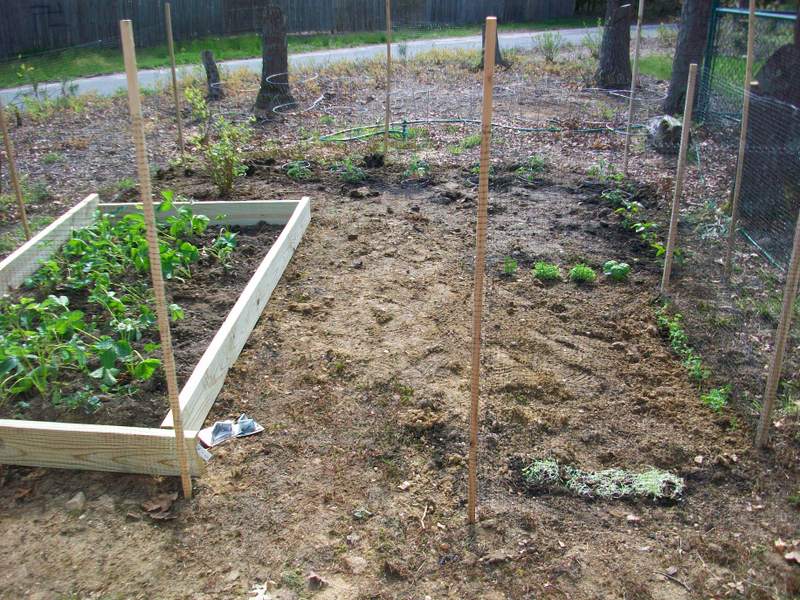
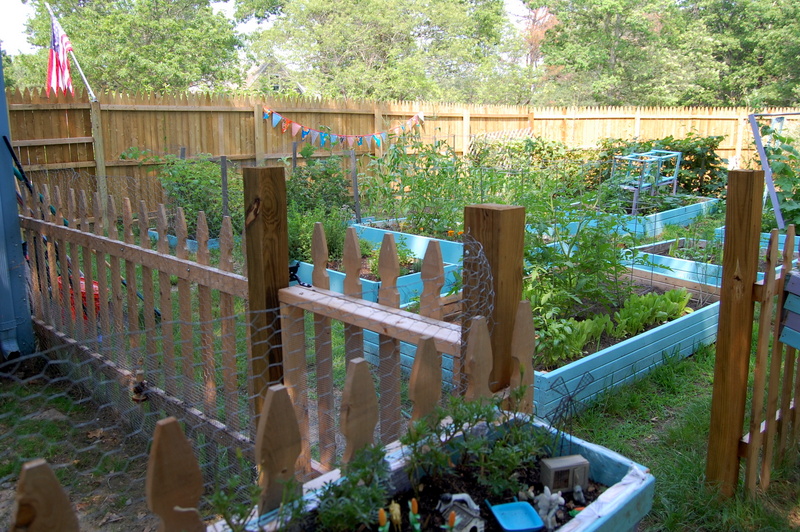
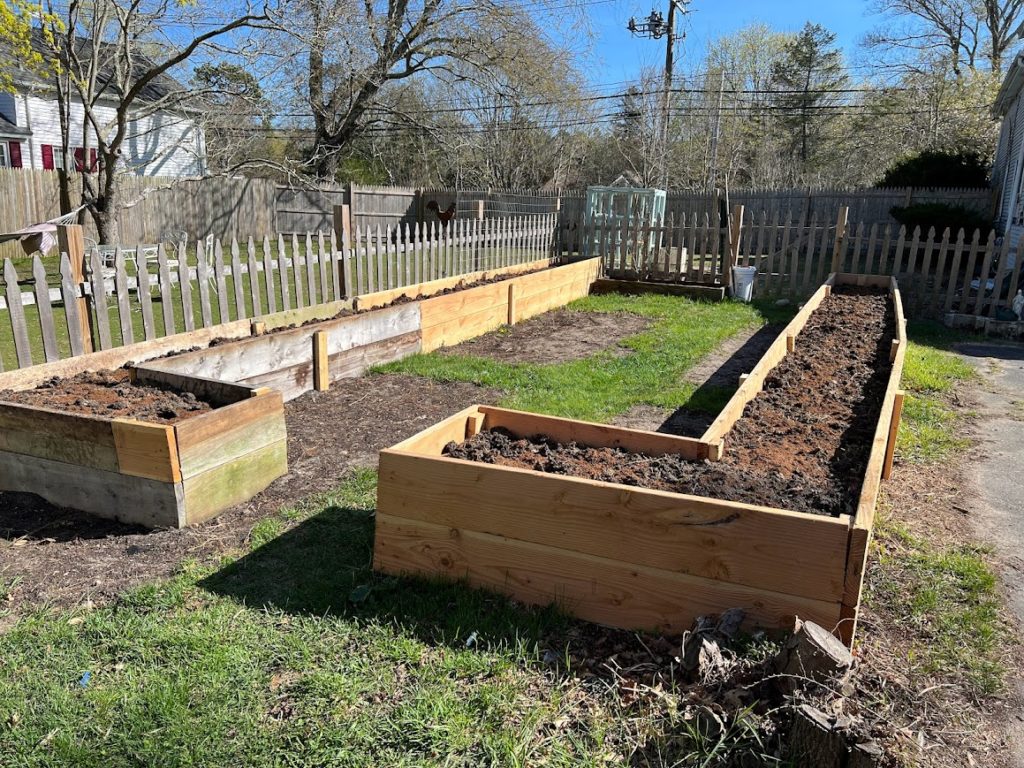
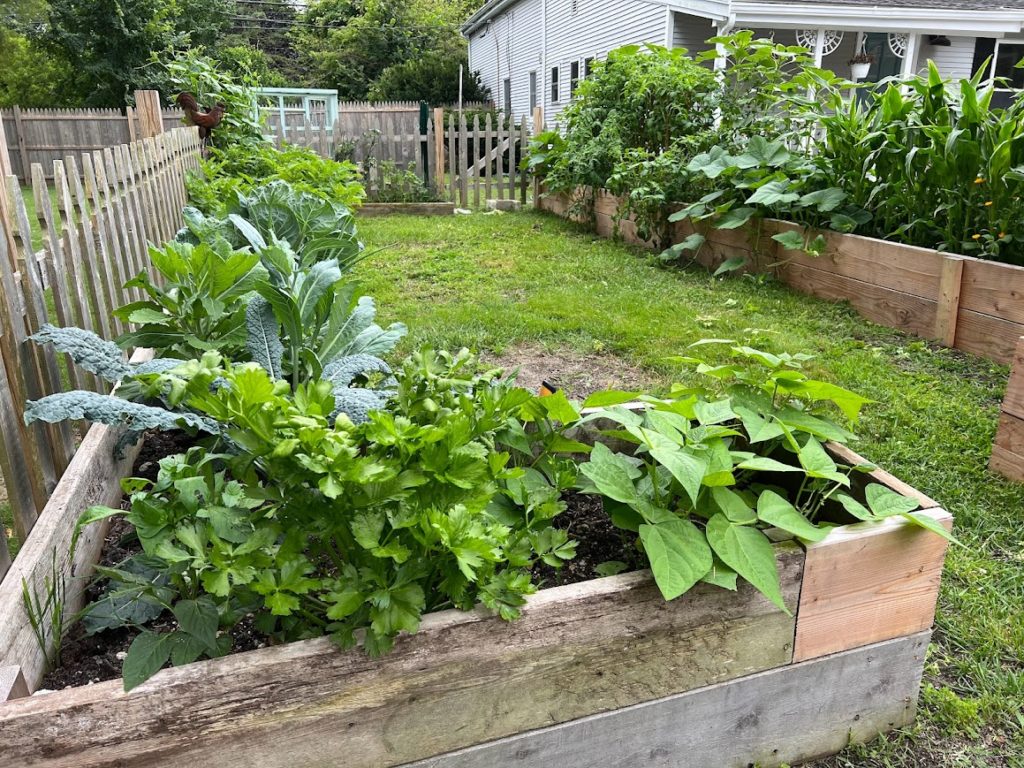
The nice part about growing your garden slowly is that it allows your garden to grow with your gardening knowledge. In 2009 I finally gave up on growing plants in the ground and built my first raised bed. That first year with raised beds I had about 32 square feet of raised garden bed space with a little bit of “in the ground” space. By 2016 I had 225 square feet of raised bed space plus an additional 400 square feet or so of conventional garden space for fruit trees & berry bushes.
In 2020 we moved and I had to start over from scratch. The new house has a lot of large maples shading the yard. The best space was much longer than wide so I built 20-foot-long beds that were only 2 feet wide. This gives me about 120 square feet in the main garden, and then I’ve got 3 other small areas in the yard with growing space. I’ve got plans for a large orchard someday when finances allow. You need to work with the space you have.
If I started with a huge garden, I would have given up the first year. Starting slowly with just a bed or two is the best way to see how much garden you need and how much you have the time and desire to maintain. That said, before you start construction have an eye on where future expansion might go. If your beds are more than 2 feet wide, make sure you leave space around all the sides for you to tend the garden. I like to leave about 2 feet between beds.
Making a raised garden bed
I have built several different size beds over the years. The smallest was around 3×3 up to the long 2×20 beds. Most of them were 4×8 and I like this size best if you have the space. I can move along the long side when weeding, harvesting, or planting and only have to reach in 2 feet. It’s manageable. It also allows for an efficient use of materials when building the bed with standard 8 foot long boards.
Pine is an inexpensive wood but like everything, you get what you pay for. The best wood to use is cedar if you can afford it. It resists rot the longest and repels insects. It is also very pricey. The pine will rot eventually, but you will likely get 7-8 seasons out of them.
Other material choices would be metal, concrete blocks or bricks, plastic, or even rubber tires. The one thing you don’t want to use is old pressure-treated wood. Pressure-treated wood dated from before 2004 was treated with chromated copper arsenate, which was found to leach small amounts of arsenic into the surrounding soil and into the plants. Newer pressure-treated wood is considered safer to grow plants in. It is treated with a cooper-based treatment. The copper can still leach into the soil, but many experts agree the health effects are minimal. Excess copper can stunt plant growth. Click here to see how I built my beds
What should I plant?
What do you eat? Start with your family’s favorite vegetables. Gardening is so much more rewarding when you can enjoy the benefits of all your hard work. For years and years, I grew green beans in my garden because they were easy to grow and because they seemed like a vegetable I “should” grow. The thing is out of 6 people in my family only me and my husband like them, and even we don’t like them that much. I stopped wasting my time with green beans and focused my energies on veggies we loved. I try to add a few new kinds every year but focus mostly on veggies we love and would buy at a store.
What can I plant in a square foot?
Look at the back of your seed packet. You want to look at the SEED SPACING. Let’s say the recommended seed spacing is 3 inches. Each side of your square is 12 inches. A 12-inch side divided by 3-inch spacing is 4 plants. So you can have 4 rows of 4 plants – or 16 plants per square. Make sure that tall plants are planted towards the north end of the bed so they do not shade smaller plants in front. Following are some recommendations for each square foot for popular plants:
Basil: 4
Pole beans: 5
Carrots: 16
Corn: 3
Cucumbers: 2
Garlic: 4
Leaf Lettuce: 4
Onions: 4
Oregano: 1
Peas: 8
Peppers: 1
Potatoes: 1
Radishes: 16
Tomatoes: 1
Zucchini: 1
Some of the larger vine plants I personally think need a bit more than the “recommended” spacing. For instance, when I try to grow tomatoes too close together I find there is just not enough air circulation and you end up with diseased plants. For tomatoes, I always leave an empty square next to them to give them room to breathe. The same goes for squash & potatoes. I know plenty of people that grow them right on top of each other, but my garden has enough room to let them breathe a bit so I’m going to give it to them.
Companion Plants & Rotating Plants
With so many plants growing in such close conditions, you want to make sure they are friendly. Did you know plants have friends too? Sometimes friends are plants that don’t compete for resources, sometimes one will deter bugs that might eat another, and some will enhance the flavor of another (think cucumbers planted with dill or tomatoes with basil). There are so many combinations. Click here to learn more about companion planting, including my planting guide
Mel from Square Foot Gardening is a big proponent of mixing your growing boxes. Instead of planting 4 boxes in a row of peppers, spread the 4 pepper boxes into different sections of your Square Foot Garden. It helps build the diversity of your garden and cuts down on disease.
Every year you will want to rotate what you plant in each box for healthy plants. This keeps plant-specific diseases from building up in the soil and keeps your soil balanced nutrient wise. Most gardeners work on a three to four year schedule. Keep a garden journal to help you remember what you planted where. Most common vegetables can be sorted into four “families”.
Enrichers (Legumes)- enriches soil with nitrogen (legumes, beans, peas, peanuts)
Nightshades – heavy feeders (tomatoes, potatoes, eggplant, peppers)
Leaf Crops – anything grown for its leaves, need lots of nitrogen (cabbage, broccoli, kale)
Squash Feeders – heavy feeders (squash, pumpkins, melons, cucumbers)
So year 1 plant green beans, year 2 plant tomatoes, year 3 plant cabbage, year 4 plant pumpkins, or go back to soil enriching beans.
For more in-depth info on crop rotation, click here
So what does a square foot garden look like?
Ideally, you will have at least three beds to allow you to practice crop rotation each season. But do what you have space for. If all you can fit is one bed, start with one bed. If you are worried about plant disease, you can empty the soil from the bed and start fresh each season. You can use the “spent” soil to amend flower garden beds or to mulch bushes. Adding a good amount of new compost each season will allow fresh nutrients to be added and can help keep most diseases at bay.
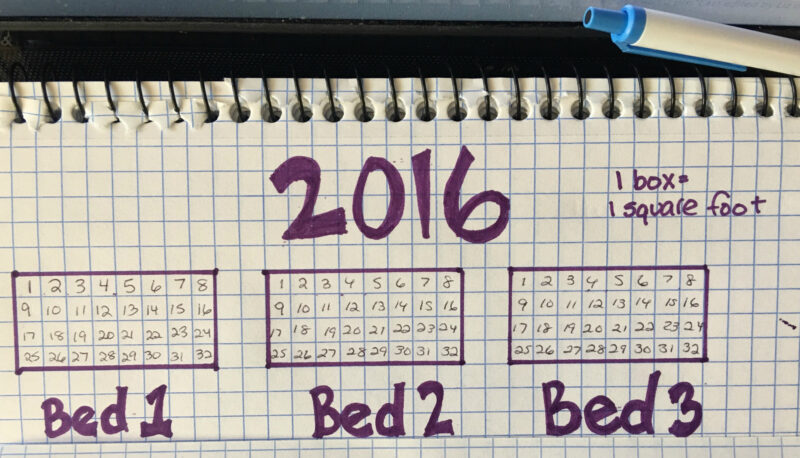
Below is an outline for a sample 3 raised bed system, featuring three beds that are 4 ft x 8 ft. Within each bed, notice the square foot gardening grid giving you 32 “mini plots”. All three beds will give you 96 square feet of growing space. This is enough for a family of 6 to have a fresh, seasonal eating garden or a family of 3-4 to have veggies for fresh seasonal eating and some left for preserving.
I have placed these beds all together just to fit them on the same page, but in real life, you are going to want to position them so you have at least 2 feet clear all around the bed for you to access and tend the bed. The tall plants are kept to one side of the bed. Be sure to position the beds so the tall plants are on the northern side so they do not shade shorter plants. Check out my plan for an inexpensive trellis system that works well with square foot gardening.
Garden Journal
The table below is also an example of how you could keep a garden journal. Once you have made your template, photocopy a bunch of them. Write the year at the top, fill in the boxes, pop it in a binder. Super easy! Now you’ll have a record to refer back to each year for crop rotation. Instead of “tomato”, record it was a Brandywine variety, where you bought it, and if you grew it from seed. Make notes about how well or poor it grew, and how it tasted. Then when you are thinking “what was the fabulous tomato we grew last year” you will have a handy record.
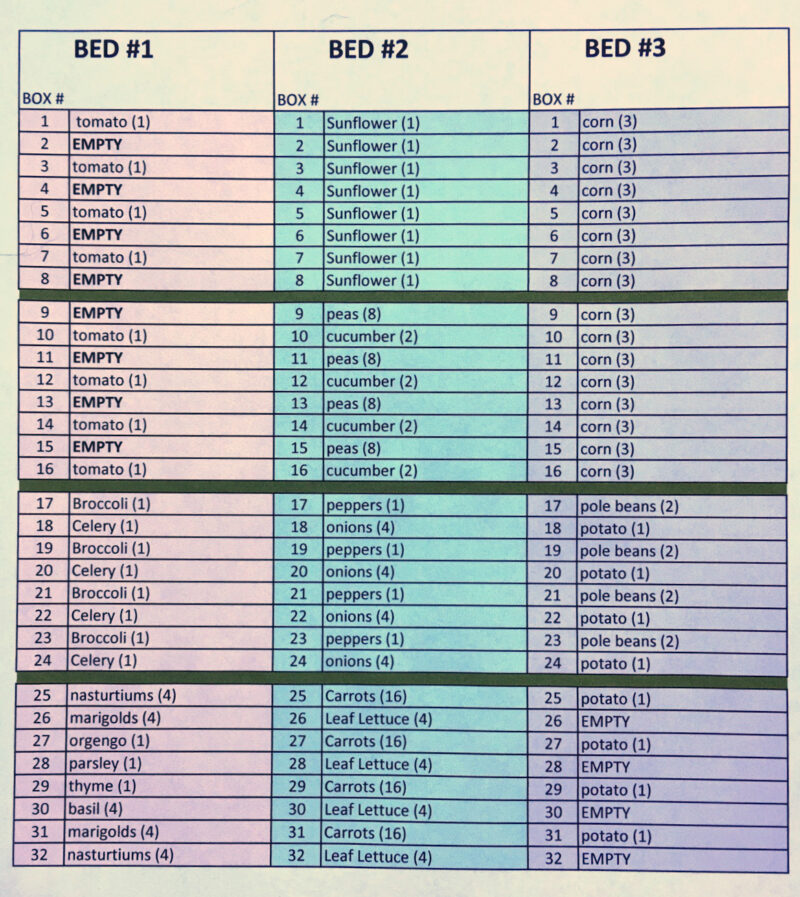
So in under 100 square feet you are growing:
8 tomatoes (I like a mix – some slicing, some cherry, some for sauce)
4 broccoli
4 celery
8 sunflowers
8 cucumbers (mix of slicing & pickling)
32 pea vines
4 peppers (any varieties)
16 onions
64 carrots
16 lettuce plants
48 corn stalks
8 bean stalks
8 potato plants
A mix of herbs
Have you tried square-foot gardening? I’d love to hear your experiences!
What a fantastic post! We have 2 square foot gardens – one at my sweetie’s house (we built it a few years back) and one at my new house. It’s incredible the amount of produce we get out of such small gardens! Your gardens look lovely – quite the change from 2009!
Thanks Debbie! It always amazes me how much you can get out of a small garden 🙂
Thank you! Thank you! Thank you! I am such a visual earner and am trying to understand and “see” a square foot garden so that I can apply it myself. I’ve been so afraid to just go out and plant because last year that’s what I did and I had so many failures due to bugs. I had a modge podge garden of companion planted things but not enough of anything and not close enough together to help each other. Let’s just say it was less than moderately successful and had my husband feeling like this whole garden thing was a waste of money and definitely didn’t save us anything. My hope is to prove him wrong this year and I feel like this article has given me hope! I’ve looked everywhere for someone sharing WHAT they are planting in their garden together and this is the first well laid example I’ve seen. I will be copying a lot of this in hopes of a first success/ a starting point/ a confidence builder and am again so thankful. Please continue to share your garden, I am following along and paying attention!
Yay! I’m glad you found it helpful! I am totally a visual learner too, that’s why I have to sketch out my garden every year, I really need to see it. Good luck with your garden this year, let me know how it goes!
Are your rows 1-8 the ones that are facing the north since they’re tall plants so they won’t shade the rest? Just wondering! I tried a raised bed garden last year and made multiple mistakes. I will be moving my frames to a sunnier spot in my side field and actually marking the sections and plant more mindful this time. Thanks!
Yes, rows 1-8 will be the tallest so they should face north end. Also when you have multiple beds make sure the tall plants from one bed won’t overshadow the short plants in the next bed. So leave space between beds, especially if the beds are laid out north to south
I love this post! Thank you. I’m curious how you trellis 8 peas in a square foot. Any tips?
You can trellis peas on bamboo stakes made into a teepee. String twine in between the poles to form a netting for the peas to grow up. You can make one to fit in just one square if you like, or combine four squares into a large 2×2 area with a bigger teepee and 32 vines growing on it. Alternately, you could set aside a few squares in a row and use a traditional lattice or chicken wire trellis down the middle of the boxes, growing 4 vines on each side of the trellis in each box. With that method you would just want to be sure the sun is hitting the box right so both sides of the trellis get sun. One more way to do it would be to again grow a few boxes in a row, then put a stake in the ground at either end and string twine at several points between the two posts for growing wires. Do this through the middle of the boxes and grow 4 vines on each side per box. The same methods would go for cucumbers or pole beans, you can even have them growing on the same trellis. Hope this helps!
Thank you for such a wonderful beginners guide. I’ve saved dozens of links to square foot gardening guides and it’s all become overwhelming. You’ve taken it down to basics in easy to read language.
Question, seems inly veg, herbs and flowers are grown this way. I realize a lot of fruit requires quite a bit of space , bit could square foot gardening be used for some types? If so, what would you recommend ?
Would appreciate your or anyone’s experiwnces orninsights on this?
Thank you for your kind words, I’m glad I can help! You are right, many fruits would require more space as they grow on large bushes or trees. You could certainly include strawberries in a square foot garden. The Everbearing Strawberry varieties might work better as they don’t put out as many runner plants as the June bearing varieties. If you combined a couple squares and trellis the vines above, grapes could also be grown. You could plant some more shade tolerant herbs or lettuce in the boxes below the vine as they would be partially shaded. Certainly if there is a will there is a way! I have had very successful harvests of raspberries & blackberries that were growing in raised square foot garden beds (this does require pruning to keep them in line, I eventually just moved them because it was too much work, but they grew very well in the square foot design for a few years). Good luck!
hi! Thanks for this great post! What does it mean when people say “face north” in a garden? Does that mean that should be the north side of the bed?
Sorry for the silly question! ?
Not a silly question! For example, in my garden, I have a 6 foot privacy fence on the north length of my garden and the south length is open and clear of trees. Since the majority of the sun comes from the south side, I would say my garden is generally south facing. If your garden was out in the middle of an open field with no obstacles it wouldn’t really matter because you would get direct sunlight from every direction, but most people have things that get in the way. When deciding where to locate your garden, you’ll want to plan for shade causing obstacles like fences, trees, your house or shed to make sure you are getting the most sunlight (which in the northern hemisphere means south facing) 🙂
Hi I’m new to gardening and I’ve decided to go with square foot gardening to get started. I found this article very helpful however I have several questions. First of all I was wondering if it’s to late to start now since it’s already May? Since it’s late should I use transplants or do you have to use seeds? One more question. I’ve seen where people say you just replant seeds after harvesting so does that mean you will go weeks without anything being produced in the garden while waiting for seeds to grow again? Thank you in advance. I’m clearly clueless.
Welcome to gardening! Everyone has to start somewhere! When you should start a garden depends a lot on where you live and how long your growing season is. Here in MA it’s possible that in May we could still get frost so I have not planted much in my garden yet. Some plants don’t mind a little chilly weather and don’t do well as transplants & could be started as seeds outside now. On the flip side, my growing season typically ends in September so I need to make sure whatever I plant will be ready to harvest by then. So something like tomatoes would never have enough time to grow from seed if I planted them outside now. What are you planning on growing & what state are you in? In the next couple weeks I plan on starting peas, carrots, pumpkin, corn, lettuce, squash, cucumbers, beans & cantaloupes outside from seeds so you could still have time. That being said, seeds can be tricky and for a beginner gardener you might have better results starting with transplants for most things. Succession seeding (where you plant seeds after harvest) works great with some things like broccoli which prefer cool weather so grow best in spring & fall (so you’d start some in late winter to harvest in early summer then plant more to harvest in early fall). With plants like corn I like to stagger my seeding – so do 10 one week, then 10 more the next week and so on, so that I have a little corn ready each week during harvest time. There is A TON to learn about gardening, I suggest you start slow with a couple of your favorite veggies and go from there 🙂
I live in Ohio. I am just wanting to do a small 4×4 raised garden bed. I don’t want to start out to crazy and get overwhelmed. I would like to start with a salad garden since that’s what I eat a lot of. I just didn’t know how to do a square foot garden with transplants. All I can find is how to do it with seeds. Would it be the same I would just replace seeds for the plants? For example, I’ve seen diagrams on Pinterest and if I’m supposed to plant four seeds in one sq ft would I just plant four transplants instead?
Exactly – just think of each seed as one plant. Salad greens are really easy to grow from seed and you could definitely still start them now. Most lettuce will be 4-5 plants per square foot if it’s head lettuce. If it’s loose leaf salad greens, I would do two rows per box 🙂
I really appreciate your post, and find it very helpful and encourageing,( and I need encouragement because this is new for me!).
Thanks Kent! Good luck 🙂 Square foot gardening is great for beginning gardeners!
Love this article! Couple questions – I see in one of your pictures a chicken – how do you keep your chickens from eating all the produce? I have chickens that free range in my back yard so I was planning a front yard garden. What would you recommend to “dress it up” for curb appeal? Veggie gardens aren’t really known for their beauty by most. And finally, any way to get your list for all 9 boxes? I’d love to see your favorite tomato etc. TIA!
Hi Wendy! My garden is enclosed by a picket fence to keep the chickens out during the growing season. I do let them in during the off season, they are great helpers for turning the soil, eating bugs and leaving behind compost. So if you want to keep your garden in the back you could put up a simple chicken wire fence. At about 4 feet high, they would have to be super determined to get in. That said, I think vegetable gardens can be every bit as beautiful as flower gardens! You can get (or make) some decorative trellis and supports for the tall plants like peas, cucumbers, pole beans, tomatoes, etc. Most herbs have lovely greenery with different textures, and they tend to be low growing so they would be great border plants. I think square foot gardening in particular can be really beautiful because the garden is so full and has lots of variety. A traditional “farm” with straight rows of a single crop wouldn’t fit in right in most front yards. I usually get most of my seeds from Gurney’s, Burpees or Baker Creek. I like to try different varieties each year, but some of my favorites that I always get are San Marzano tomatoes (paste tomato), Jelly Bean tomatoes (cherry tomatoes), Sugar Snap peas, Miss Picker cucumbers, Yellow Ebenezer onion sets, and Gotta Have It sweet corn. Good luck, I’d love to see pics when you get it going 🙂
Could you please recommend a company to buy organic seeds?
Baker Creek Heirloom Seeds is my go to company – great quality and great service 🙂
I just visited their website and looks like a terrific place to get seeds and plants.
My wife and I are considering moving to Delaware and as soon as we get there setting up a garden is my first priority.
Here is another basic question. How much mulch, vermiculite, and peat moss do I need to buy for a 4 x 4 box? If I need to fill it to the top of the box, I would have to buy probably quite a bit of these materials.
It depends on the height of your bed, but if you have a 4×4 bed that is 12 inches deep, you will need about .60 cubic yards of soil. If you are buying 40 pound bags that is about 14 bags. Far more economical is to contact a landscape company about delivering compost by the truck full. Many companies will have a minimum delivery though so you may have to buy multiple yards of soil unless you have access to a pickup truck and can pick it up yourself. I have found a standard size truck bed holds just about 1 cubic yard and ends up costing around $25-$30
Great website! Thank you! Learned a lot from reading comments and answers?Newbee
Also from all the main information! Extremely helpful. Look forward to seeing more!
I’m so glad I could help! ?
I fell on your post because I heard that you can plant 64 corn in a sqft garden. 4 per square. I see that you say 3, but I’m going to try 4 just to see what happens! This is my first year trying this method. I usually plant rows so I’m excited!
the only way you will know is to try! I bet if you put down some good fertilizer you will be just fine 🙂
Hi! I did container gardening last year and am going to attempt one raised bed this year. I am thinking a 4×6 or 4×8. I am doing research on companion planting and getting an idea of what gets along and what doesn’t. For example, I know that tomatoes and potatoes are not friends, but I would like to grow them both in the same garden bed. Is that possible? How much space should you leave between non-companion plants? Thanks!
Both tomatoes & potatoes are members of the nightshade family, so many of the same diseases can effect them. They also will be competing for the same nutrients. But yes you can definitely grow them both in the same bed! The same goes for most “unfriendly” plants. Just try to keep them as far apart as possible and be sure you have rich soil. The other consideration when growing any root vegetable near tomatoes is that tomatoes have huge root systems, be careful not to damage them when harvesting the root vegetables. Good luck!
This will be my first attempt at square foot gardening. I was comfortable with the approach my patents took when it came to gardening. So, when I started my first garden I followed suit. Which was working for me until recently. Two years ago my garden was a jungle. My plants were huge and beautiful. The healthiest garden I or any of my neighbors had ever seen. It was an oasis. An oasis with very little produce. Last year was a very very wet year. Out of a 300 sq ft garden I picked 3 tomatoes & a ton of hot peppers (off one plant). I planted 12 squash plants before the season was over & they all died. While I have already planted my garden this year. Your page has inspired me to try my hand at your way of gardening. You have made it seem a little less intimidating. I will be using your website as my gardening bible.
I am so happy to hear that Michelle! Thank you 🙂 You might want to test your soil (you can buy a soil test kit and do it right from home). Your soil might have too much nitrogen which could make the plants just focus on producing a ton of leaves but not a ton of flowers. You can read more about testing your soil here: https://thecapecoop.com/testing-your-garden-soil/
I do have a question. I getting the spacing when it is as simple as plant every whatever amount of inches apart. What about when the instructions also include row spacing? Does the inch spacing x 12 still apply?
You can ignore the row spacing, it is usually at least a foot apart so obviously would not work for a square foot garden. You want to calculate how many plants per square and then just space them evenly. If I can plant 9 in a square, I plant 3 plants in 3 rows all about equal distance from each other and the sides of the square
Starting with small lawn area will gives you success to start landscaping in big lawn area moreover you need to follow all tips which helps in maintain and doing landscaping in Langley beside this you need to check which plant can grow in your lawn area.
Hi, I’m really curious where the information for this sentence came :” For square foot gardening you need as little as 16 square feet per person for fresh eating and about 32 square feet per person to have enough for preserving!”. Can you point me to your source?
This is from the book “All New Square Foot Gardening, 3rd Edition”. An example of the harvest the editors produced from a 16 square foot garden during the course of a growing season include “2 gallons green beans, 2 gallons peas, 18 cucumbers, 4 muskmelons, 18 tomatoes, 12 green peppers, 10 eggplants, 8 potatoes, 2 heads cabbage, 3 heads broccoli, 3 heads cauliflower, 4 gallons kale, 8 shocks lettuce, 16 onions, 48 radishes, 2 gallons spinach”. Honestly I think that is A LOT of produce to expect from a 16 square foot bed unless you have ideal growing conditions (like I am sure the book editors have), but I have had some very impressive harvests from such small spaces with this dense planting method.
I’m a big fan of your gardening blog and I really enjoyed reading your post on square foot gardening. It’s great to hear from someone who has been successful with this method! Great job posting such an awesome article.
Hey, I just read your article on square foot gardening and it was great! I’ve been wanting to try out a new method for my garden for awhile now. One of the things that’s been holding me back is not knowing where to start or how much work it will be. Thanks so much,
Hi, I read your article. I must say it is a well-detailed guide for beginners. If someone is interested in square foot gardening then It will help a lot. Thank you so much
I am so glad you found it helpful!