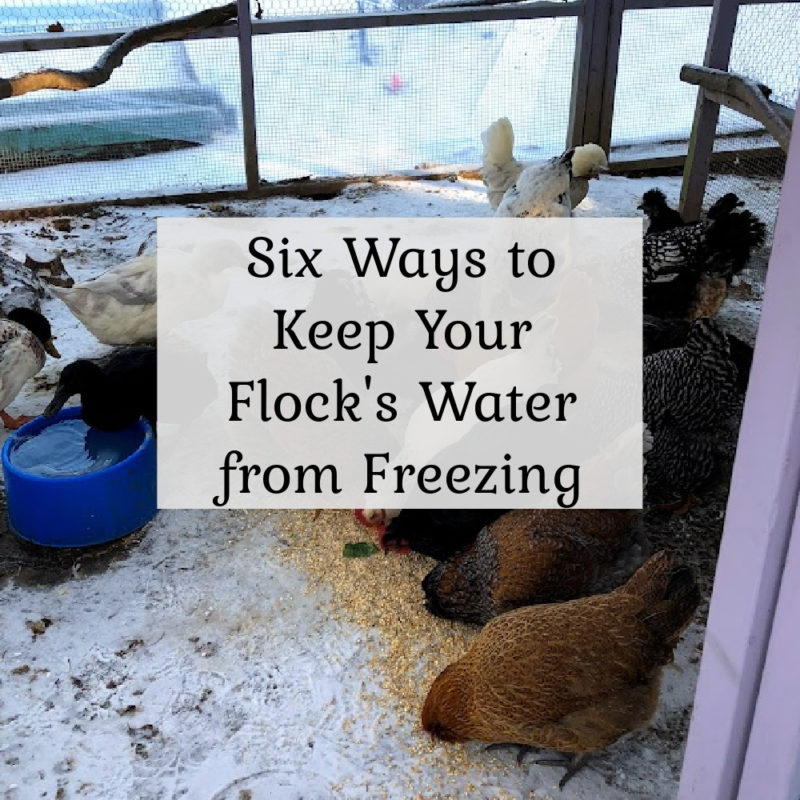
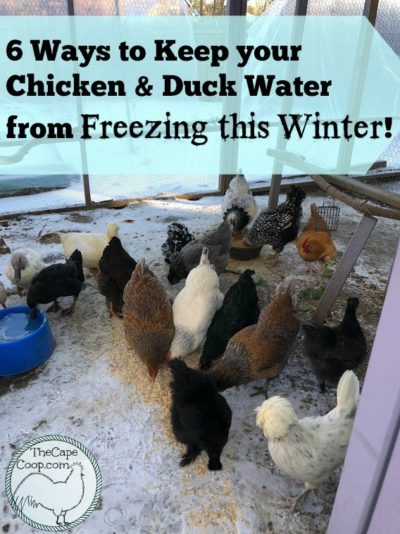
6 Ways to Keep your Chicken & Duck Water from Freezing
---------------------------------------------------------
If you live in a northern climate, one of the most challenging parts of raising poultry is keeping their water from freezing in the winter.
Here in New England, we have weeks on end where we might not get above freezing, and can often dip below 0. Chickens and ducks need fresh, liquid water every day to stay healthy. Ducks especially need water to digest their food properly and to keep their sinuses clear.
If you have electricity in your coop and run this job will get much easier! If you don’t have permanent electric lines run to the coop, you can run a really long extension cord out there.

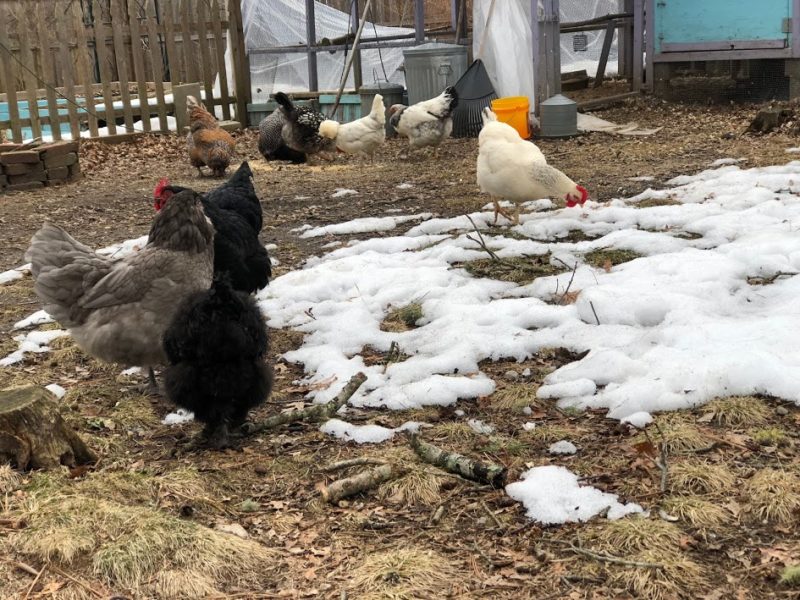
Let’s just be honest. If you can’t or don’t want to run electric or extension cords to your coop, it will cost you in time. It’s all a trade off. If you are living in Texas, it probably won’t be too time consuming. If you are in Canada, you are going to wear a good path between your house and coop keeping that water liquid. There are even super cold times when my electric heater can’t keep up and I have to thaw the water. This is one of the reasons many large farms reduce their livestock numbers by butchering before winter sets in.
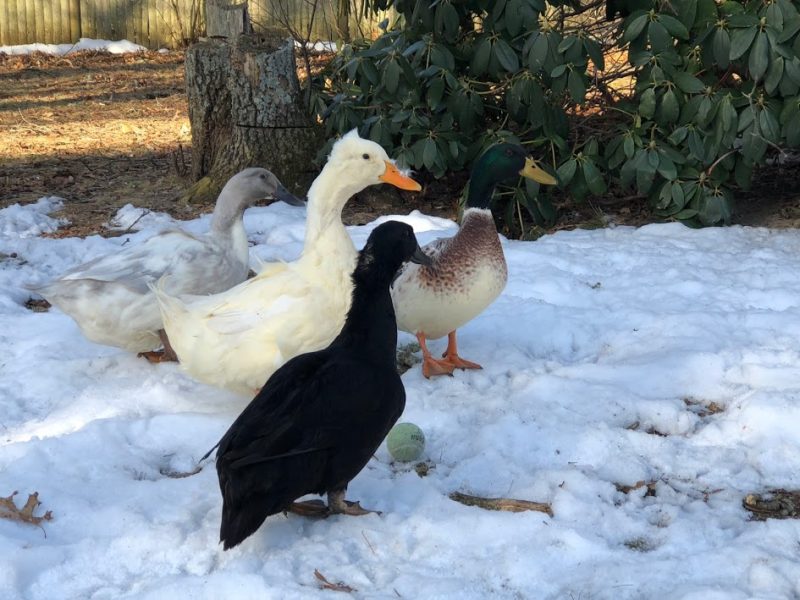
Because our ducks make such a mess with water, we keep the water in the run. Keeping the water inside the coop and possibly having wet shavings can really increases the risk of frostbite for your flock. Click here to learn more about preventing frostbite with your flock
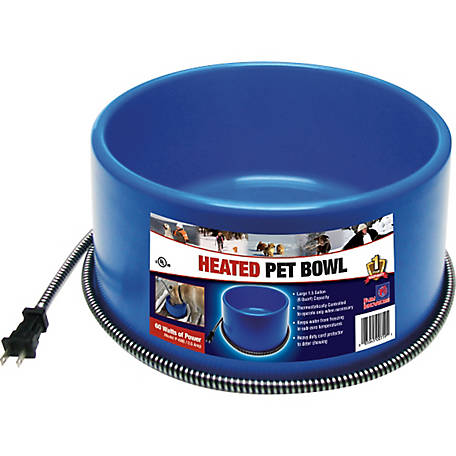
Electric Pet Bowl
For the past several winters, we have used an electric heated pet bowl. I love that it is deep so the ducks can dip their whole heads in, and it holds plenty of water. If you have ducks, they will splash about and make a mess and try to swim in it, so keep this outside in the run. It was inexpensive & durable and has an internal thermostat so it only kicks on when the temperatures go below freezing to help keep electric bills down. If you can swing electric in your run this is my #1 recommendation.
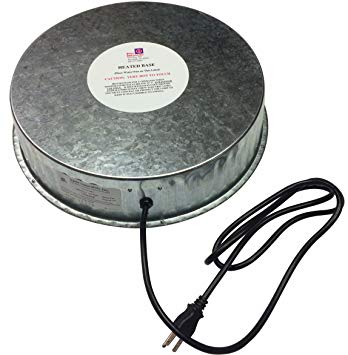
Heated Waterer Base
Before we got ducks we used a heated waterer base. You need to have electricity available for this option, and a metal waterer. The nice part of this option is that you can use your existing metal waterer. The heater is a round base you put your waterer on top of. A thermostat will turn the heater on when temperatures dip below freezing. If you are using this option inside the coop, put the base on top of a cement block and keep shaving away from it to prevent fires. It doesn’t get super hot & is unlikely to catch on fire, but better safe than sorry.
Ping Pong Balls
If you don’t have electricity, you have to get a little more creative. This option will work great if your temps are in the 20s or so (colder than that and you will just need to be changing out the water more). Float a few ping pong balls in your water dish (use a rubber or plastic dish, metal holds the cold and will make the water freeze faster). As the breeze blows the balls around, and your birds drink and disturb the balls, they will keep ice from forming on the surface of the water for awhile.
Salt Water Float
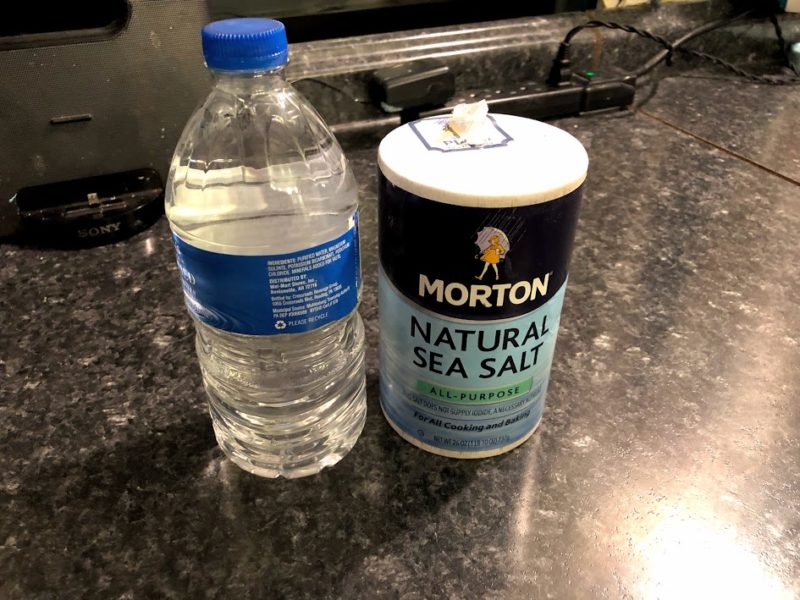
This one is nearly free and easy! Put 1/4 cup salt in a 20 oz plastic water bottle, fill to the top with water. Float this salt water bottle inside your waterer. Salt water has a much lower freezing point (it has to get really cold for a really long time for ocean inlets to freeze). Floating this bottle in your water will slow the freezing process of the water around it. Much like the ping pong ball option from above, as the bottle moves about in the water, it will stop ice from forming and because the salt water isn’t freezing as fast it won’t lower the temp of the drinking water. I have used this option in a pinch when my electric heater base went down, and it really does extend the amount of time before the water freezes over.
Switching Out Waterers
This old school way is really the only tried and true way to keep your bird’s water from freezing when the temperatures get into the single digits, stays there for days and you don’t have electricity. You will need 2 plastic waterers, one that is outside, and another inside thawing. Keep the extra inside and you just have to swap it out for the frozen one a couple times during the day. The bigger the waterer, the longer it will take to freeze. This is certainly the most time consuming option – but it’s guaranteed to work!
Boiling Water
If you don’t want to invest in several waterers, a free option is to bring out a pot of boiling water to thaw the waterer a few times per day. If you live in a moderate climate that gets only a few freezing days this option would be fine. Just be careful after you add the boiling water that it doesn’t make your chicken’s water too hot! Use a stick or spoon to stir up the boiling & frozen waters and carefully test the temperature with your hand.

We also run an exterior, heavy duty extension cord to our coop in the winter. We used a heated enclosed 2 gallon fount. Works great! We just put it away in the spring.
Here in Central KY we get days that freeze the water, usually followed closely with a warmer spell. What works fantastic for me is a Crock-Pot! It MUST be one of the ones that has a ‘warm’ setting on it as well as ‘low’ and ‘high’. If you put cold water in it, it will keep it just warm enough to keep the water from freezing. My girls perch on the edge of the Crock-Pot and it’s not hot enough to burn their feet. I got lucky and found my Crock-Pot at Goodwill for $2!! ?
Great idea!
Using a crock-pot to keep water from freezing is very dangerous and can electrocute or burn your livestock. Plus there are far less dangerous and less expensive ways to do this.
I’m thankful that my husband put an outlet in our coop. But I did have some large salt floats in the duck pond and they did a fair job until the hard freeze finally hit.
That is great! Having electric is such a wonderful convenience!
Groovy article- we are a two-bowl family during the winter up here in NH. Our outside spigot runs through a heating element, though, so we don’t have to tromp inside to fill one up.
Haven’t tried floating heaters yet, though that might be something we’ll look at when the kids move out and we take care of the ladies first thing in the morning:)
Cheers!
We use floating heaters for our horses, chickens, ducks & turkeys……they work well, you just have to keep an eye out no matter how you deal with winter.
The salt water float works just fine for us!
I’m looking at the heated pet dish for ducks ( this next winter will be my first winter with ducks), wondering how easy it would be to dump out and clean daily in winter. I live in Anchorage, Alaska and it looks to me like carrying this this thing to dump outside of the duck coop might not be the easiest thing ?
Looking for recommendations for winter water system, easy change out, ducks only. We have electricity available.
The heated pet bowl will not be hard to move. I have mine on a long extension cord so I can move it outside to dump without even unplugging it. It is not overly large or heavy. The biggest issue I have is sometimes I have to give it a little kick because when the ducks splash water around the outside of the bowl it can freeze to the ground.
Thank you for your input 🙂 I’m probably going to go ahead and try out this dish this winter !I’ll just have to figure out where to dump and clean out that doesn’t make to much of an ice rink hazard for the ducks.
I put a metal bucket in the heated bowl for my ducks. It catches the water they splash, and they can’t swim in it. The bucket is easy to empty and refill. Worked great last winter!
That is genius! Great thinking!
Chicken Waterer
I use an inverted 20 litre (5 U.S. gallon) water jug, upside down inside a 20 litre plastic pail, inside the coop year round. Keeping it inside the coop keeps wild birds & their potential diseases out of it. The pail has a few holes large enough for the chickens to get their head(s) through comfortably, cut a couple of inches up from the bottom. The plastic pail with inverted water jug is set on top of a metal container, in part to keep rodents out of it but mostly for winter when I run an extension cord to the coop to power small space & water heater(s). The water heater is a 40-60W light bulb set inside the metal pail with a metal lid, preferably fairly tight fitting, & it is controlled by an electric baseboard thermostat, slightly adjusted (very easy modification) to only come on when temperatures are close to freezing. This arrangement has worked for about 10 years, even in outside temperatures getting down around -20°C (-4°F). A full jug does start to freeze but has never frozen entirely. Much would depend on how full the jug is & how many birds are drinking from it. I will note that, for extended periods at those temperatures I have a little ceramic heater in the coop, controlled separately by another modified baseboard thermostat set to come on at about -5°C (23°F). At those temperatures the ceramic heater mostly just takes a bit of the chill off.
I also have a programmable switch that I can set to turn on & off during the winter to [help] ensure the girls get enough light to keep producing eggs. Start & end times are determined by the length of natural light available so the programme changes a bit as winter drags on.
Notes:
– The removable inverted jug cap (with a hole in it) is on when the jug is in place but can be easily removed to fill the jug.
– The drinking water level in the pail is maintained by vacuum & is determined by the height of the inverted water jug opening off the bottom of the pail. The inverted jug is kept off “floor” of the pail by a short length (5-6 inches?) of 4” PVC pipe with 1 or more small notches (or holes) on the bottom side to let water flow. Water only escapes the water jug when the pail level gets low enough to allow air into it, breaking the vacuum.
– Keeping the water level fairly low keeps it cleaner longer or, at least, the entire volume water isn’t polluted as soon as the first water the chickens drink from is. The debris in the ”old” water is diluted by cleaner water flowing in. The height of the small hole(s) in the pail bottom is arbitrary but should be consistent & I’d recommend no more than about 1 to 2 inches (2.5 to 5 cm) from the bottom of the pail.
– The water jug is similar in size to the pail which helps to prevent debris from falling into the water but I also have a thin wire hoop extending above the top of the pail/jug to keep the chickens from roosting there.
– This setup prevents the chickens from actually getting into their drinking water & there’s less spillage than there is with an open topped container.
Apparently, I’m unable to post a picture.
that sounds like an awesome set up – great job!
It works fairly well but not my idea originally. I got the idea from somebody else’s post on the internet & I’ve made some of my own modifications. Hard to tell from my long-winded, awkward write-up but it’s actually a pretty simple set-up. I have a photo intended to be included that should help visualize it but it didn’t tag along when I copy & pasted my write-up in the comments. Can JPG pictures be posted here? Beautiful day but about -6°C (21°F) this morning so keeping things not frozen is (& has been for a few weeks) close to top of mind.
I buy 10 hour hand warmers and place them under my large plastic dog bowl. It keeps the water from freezing and uses no electricity. It doesn’t get too hot to hold in your hand, so it’s safe to use under the plastic. I buy lots of them when they go on sale in the off season.
What a great idea!